Not every purchase belongs on a credit card
|Subscribe·Archives·Current Issue
Not every purchase belongs on a credit card
Learn when to maximize rewards and when to keep more money in your pocket.
Credit Coach Rob

Credit Coach Rob

Jun 26, 2026

For years we've heard the advice...


"Use your credit card for everything and earn rewards."


And for many purchases, that's great advice.


But recently, more businesses have started passing their credit card processing fees directly to customers.


Suddenly, that 2% cash back isn't looking so impressive when you're paying a 3% or 4% surcharge.


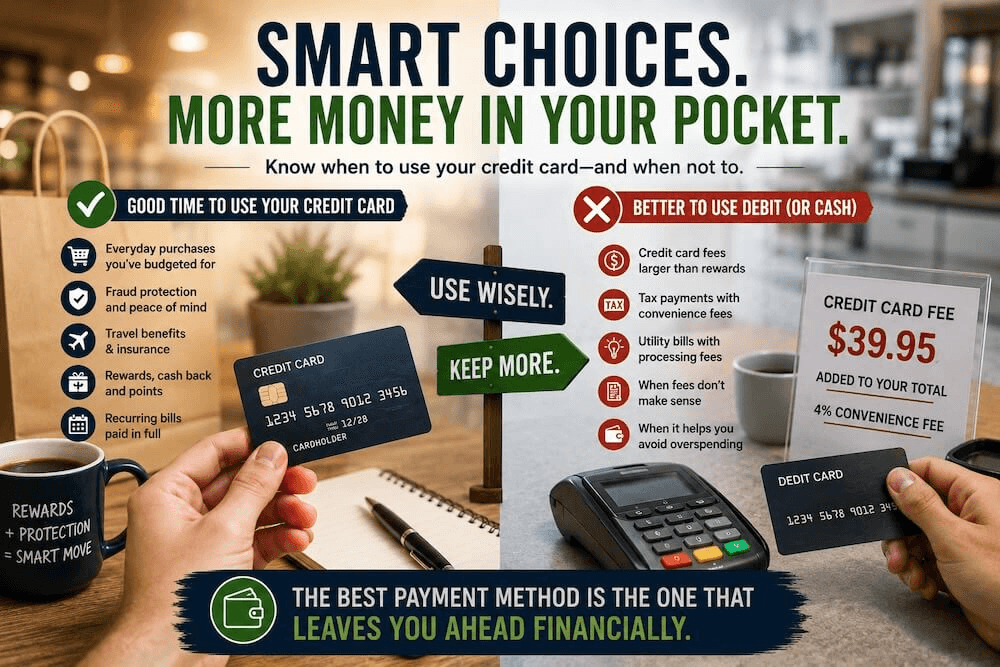
I recently saw someone paying nearly $40 in credit card fees on a single transaction. 


At that point, the rewards weren't rewarding anything.


They were costing money.


The lesson?


Using a credit card isn't about using it everywhere.
It's about using it wisely.


Have you ever paid extra just to use your credit card?

Every Payment Has a Purpose

Credit cards are fantastic financial tools. But they are still just tools.


Sometimes the best tool is a credit card.
Sometimes it's your debit card.
Sometimes it's cash.


The goal isn't to be loyal to one payment method.
The goal is to make the decision that leaves more money in your pocket while protecting your financial health.


Smart financial people don't ask, "Can I use my credit card?" They ask, "Should I?"

Advertisement
Advertisement

When Credit Card Makes Sense And When It Doesn't

When Credit Card Makes Sense


1.Everyday purchases already in your budget

Groceries.

Gas.

Dining.

Household supplies.


If you already planned the purchase and pay your balance in full every month, rewards are simply a bonus.


2. Online shopping
Credit cards typically offer stronger fraud protection and dispute rights than debit cards.


If something goes wrong, it's usually easier to resolve.


3. Travel reservations
Hotels.
Flights.
Rental cars.


Many travel cards include travel insurance, rental car protection, trip delay coverage and/or baggage protection.


Those benefits can provide real value.


4. Large purchases
Some cards include extended warranties, purchase protection and/or return protection.


Those benefits can save hundreds of dollars if something unexpected happens.


5. Recurring bills
If you pay your balance in full every month, recurring bills can simplify budgeting, earn rewards and help build consistent payment history.


Just make sure you review them regularly.


When another payment method makes more sense


1. When merchants charge a credit card fee
This is becoming more common.
If the fee is larger than the rewards you'll earn...
Use your debit card instead.


Keeping an extra $40 is usually better than earning $8 in points.


2. Tax payments
Many tax payment services charge convenience fees.
Before paying by credit card... compare rewards earned, processing fee and interest if you won't pay immediately.


Sometimes debit or a bank transfer is significantly cheaper.


3. Utility bills with processing fees
Many utility companies charge extra for credit card payments.


If rewards don't offset the fee, use another payment method.


4. When you're tempted to overspend
Some people spend more freely with credit than with money leaving their checking account immediately.


If using a debit card helps you stay disciplined... Use it.


The best payment method is the one that supports good habits.


5. When carrying a balance
Rewards disappear quickly when you're paying interest.


If you're unable to pay the statement balance in full, focus on reducing debt before chasing points.


What purchase have you made recently where using your debit card would have actually saved you money?

Don't Let Rewards Distract You From The Math

Banks know people love rewards.


Airline miles.
Cash back.
Travel points.
Hotel stays.


Those perks are great... until they encourage you to ignore the total cost.


I've seen people choose a payment method because it earned points while paying fees that were five times larger than the rewards.


That ain't maximizing value.


That's letting the reward program make the decision.


The smartest financial decision isn't the one that earns the most points.
It's the one that leaves you with the most money.

Advertisement
Advertisement

Build a Simple Payment Strategy

Before every major purchase ask yourself...


    • Is there a credit card fee?
    • Will my rewards exceed the fee?
    • Can I pay this card off in full?
    • Does this purchase benefit from purchase protection?
    • Which payment method leaves me financially ahead?


A 30-second decision can save hundreds of dollars over a year.

Remember that credit cards and debit cards are tools.


Financial wisdom comes from knowing which one fits the situation.


Sometimes that's your rewards card.
Sometimes it's your debit card.
Sometimes it's walking away from the purchase altogether.


The goal isn't to collect the most points.
The goal is to keep the most of your hard-earned money while building healthy financial habits.


Every dollar you don't waste is another dollar working toward your future.


Until next week,


Disclaimer: Guide to Perfect Credit and Credit Coach Rob provide financial education and coaching based on personal experience and research. We are not licensed financial advisors, accountants or attorneys. This content is for informational purposes only and should not be considered financial, legal or tax advice. Always consult with a certified professional for your specific situation.

Get The 850 Pin!

It’s more than a number... it’s a symbol of the journey.

My journey started with free t-shirts and ended at 850.


What's yours?


👉 Check out the 850 Pin


#850Journey #CreditComeback #YouGotThis

This publication sponsored by